

How to Choose and Live with Art: Colouring Outside the Lines
Art can make or break a room. Architecture matters. Interior design matters. But without great art it’s hard for a space to realise its potential.
Art is, to state the obvious, an art, not a science. It’s alchemical and instinctive even if certain practices, like mixing paint or firing clay are also deeply scientific.
I’ve long considered myself to be an art lover but it’s through working with true specialists- art consultant Gilly at Cramer Bell, and former client Rachel Maggart, a collector, curator and independent arts consultant- that I’ve been initiated into the mysteries. And they do remain, in many ways, mysterious.
One of the similarities that struck me in their individual approaches to curation is their shared confidence with scale. Neither is afraid to go big, selecting large scale pieces that have strong, immediate impact. And neither is afraid to go small either, sometimes choosing deliberately small scale pieces, that counterintuitively pull you in through some reverse kind of impact mechanism. This playfulness and dexterity with scale is something I really admire, particularly as I recognise my own historic tendency towards modestly sized and proportionate art works. Yet it’s often when you push beyond those instincts and colour outside the lines so to speak that the alchemy occurs, and spaces become that bit deeper and more intriguing.
Medium is another aspect in which my perspective has broadened. My weakness for all things textile means I’ve long held a fondness for tapestries in galleries but having now seen them beautifully incorporated into the studio’s schemes I’ve realised they are much easier to translate into living settings than initially thought. Beyond tapestry, Rachel’s own home contains a large vocabulary of mediums, including bronze, lightbox, mosaic, sculpture and even a handpainted fridge, producing a richly layered and sensorial whole.
Keen to glean a little of their wisdom, I recently caught up with them both and asked them to share a glimpse into their own unique approaches to selecting artworks that transform a space.
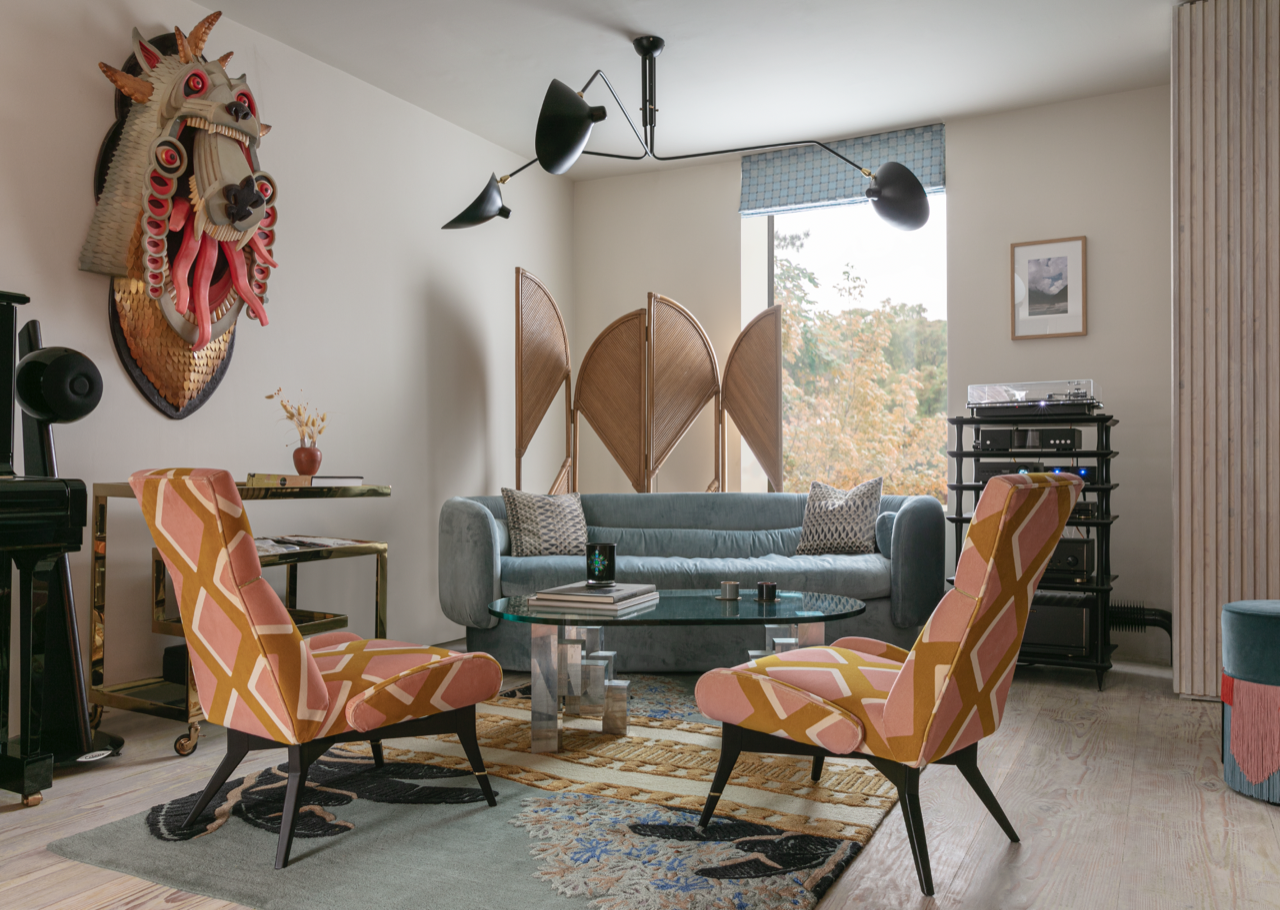
Curation- Rachel Maggart / Artwork- ‘Simulacra of the Spirit’ by AJ Fosik,
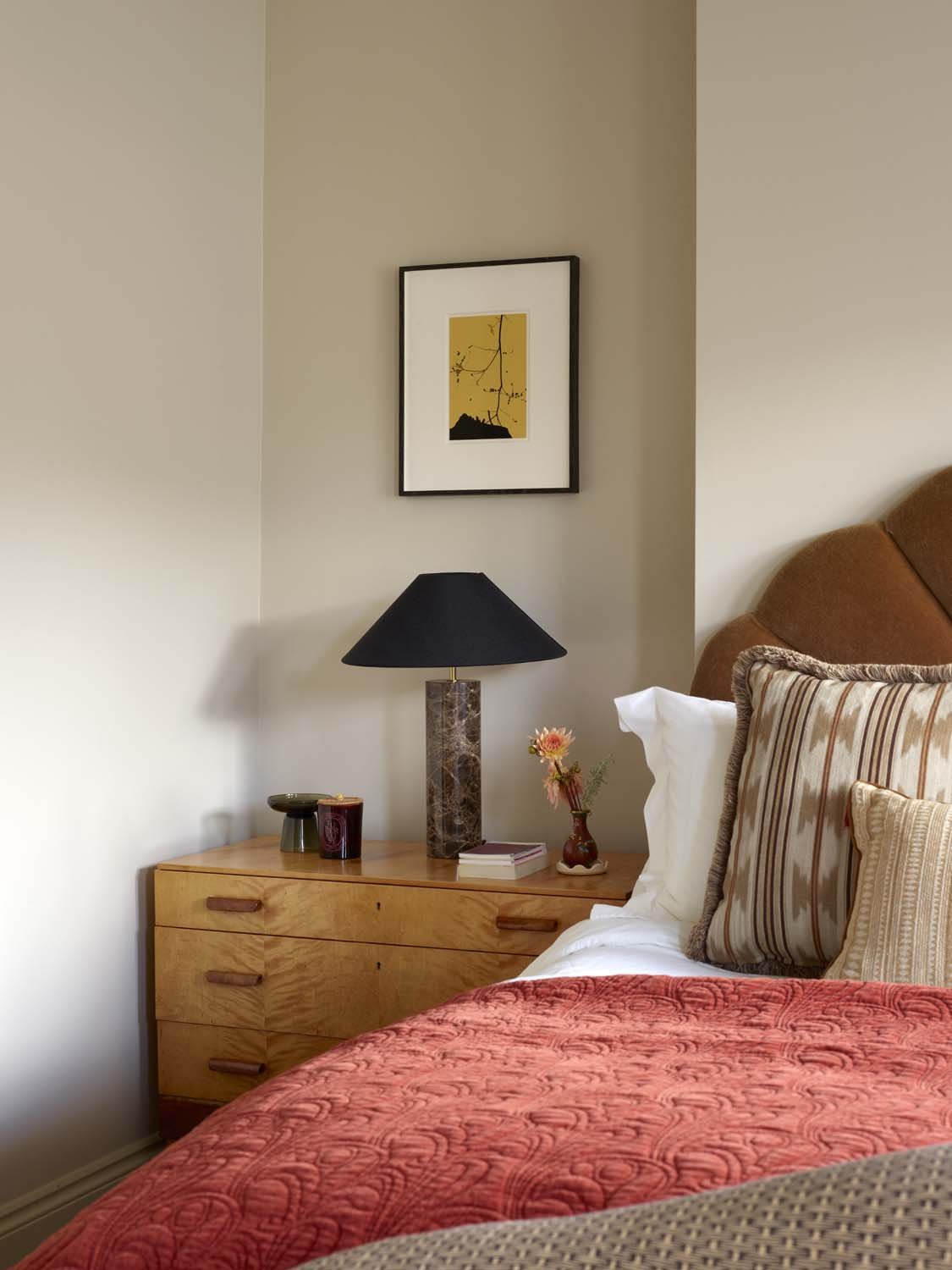
Curation- Gilly Thorne / Artwork by Albarran Cabrera
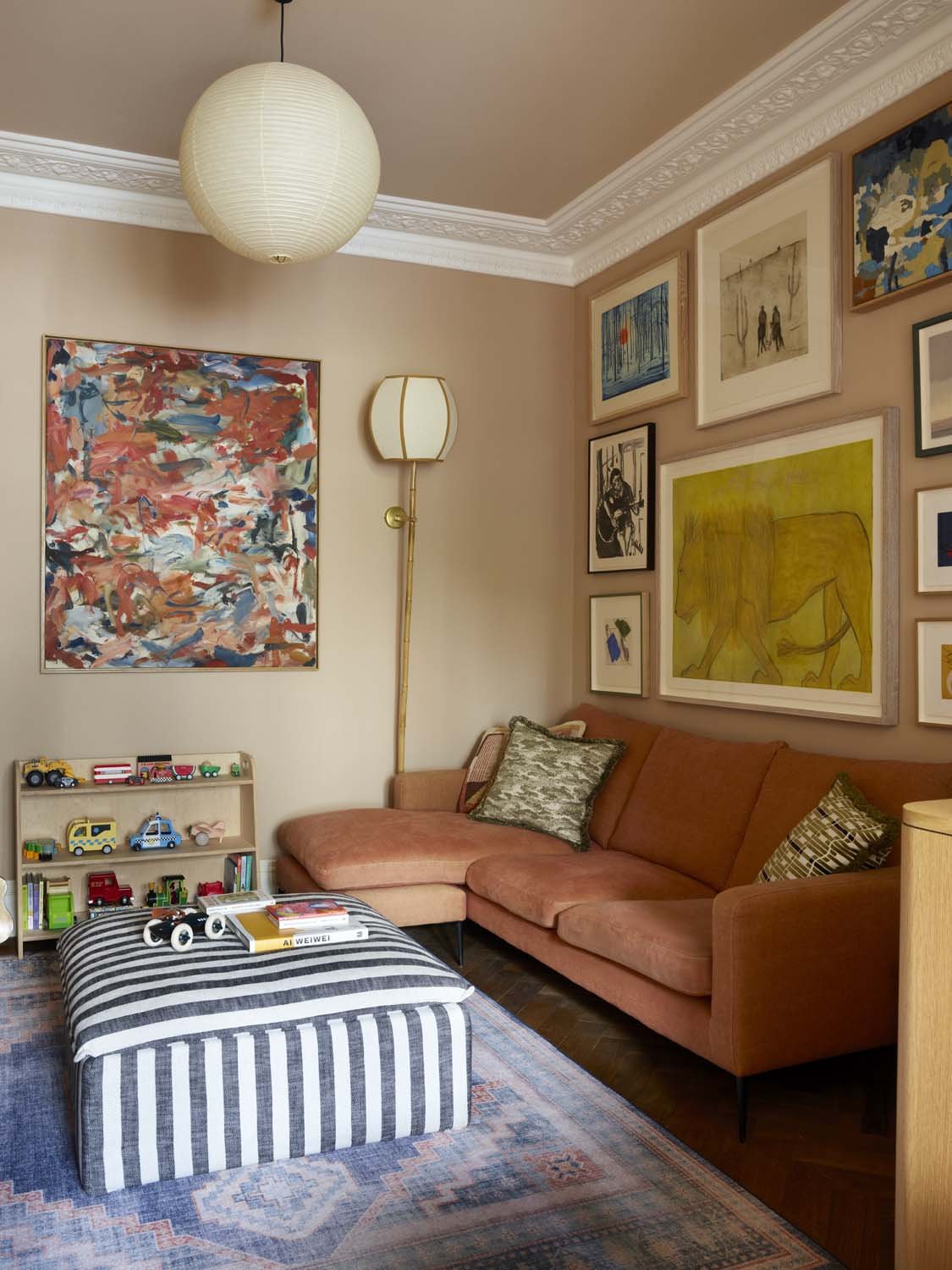
Curation- Gilly Thorne / Artworks by Kate Boxer, Chantal Joffe, Victoria Achache, Caroline Isgar & Anne Griffiths
Gilly, Art Consultant at Cramer & Bell
What makes a piece feel right in a room beyond scale, palette or style?
A piece feels right when it holds its own; it has a presence that settles into the room but also adds something intangible.
Do you think about art differently depending on the time of day a space is used?
We always try to source work that holds up across all times of day, particularly as light and use will shift. In commercial spaces like gyms or meeting rooms, we tend to lean towards calming, inoffensive abstract works that can just be. In more private spaces like bedrooms, you can be a bit more intimate, for example with softer figurative works, while still keeping that sense of calm. It’s about matching the tone of the space and how it’s used, rather than overthinking specific moments in time.
How can a piece introduce tension or depth into an otherwise calm interior?
A calm space actually benefits from a bit of friction. Introducing a work that contrasts slightly, whether through subject matter, scale, or material, can stop a room from feeling too resolved. It creates a focal point and invites a second look, which is often where depth comes from.
What do people often misunderstand when trying to “match” art to a scheme?
You don’t need the artwork to exactly match all the colours; we’ve even been asked to match art to cushions, which feels slightly beside the point. Art shouldn’t be decorative in that way. It can be bold, intriguing, and introduce completely new colours or textures. In many ways, the art should come first, and the scheme can respond to it.
When placing a piece, what matters more to you, instinct or context?
Ultimately, the client. They need to genuinely love the work and be able to live with it over time. Our role is to guide and edit; to put forward pieces that we know will work within the space and their vision, acting as tastemakers.
Are there particular materials or mediums that lend themselves more naturally to domestic spaces?
We tend to gravitate towards original works. That doesn’t necessarily mean more expensive, but there’s a depth and integrity to something that’s been made by hand. Supporting an emerging artist producing beautiful, textural works, whether that’s painting, etching, or works on paper, will always feel more considered than a mass-produced reproduction.
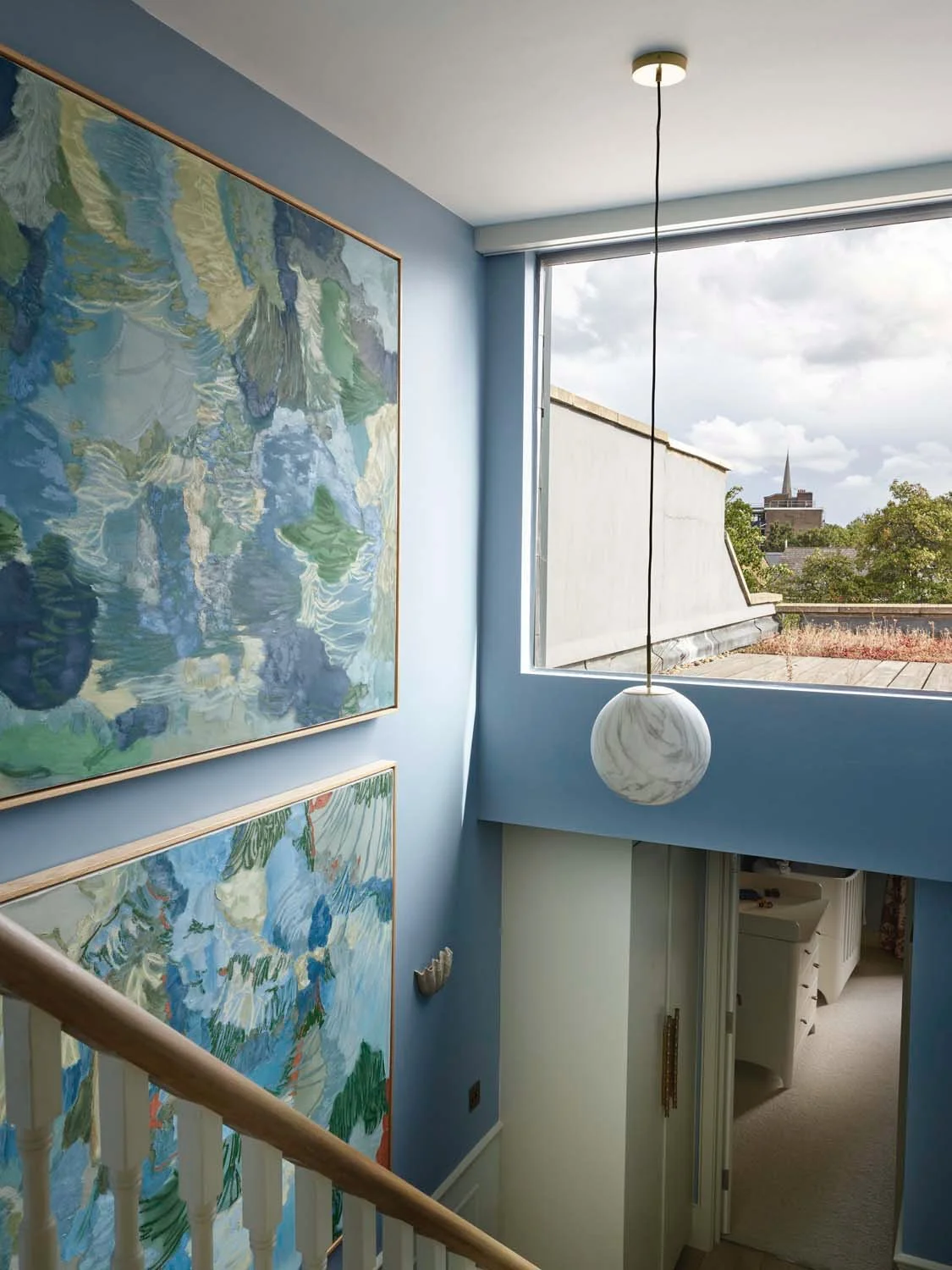
Curation- Gilly Thorne / Artwork by Anne Griffiths
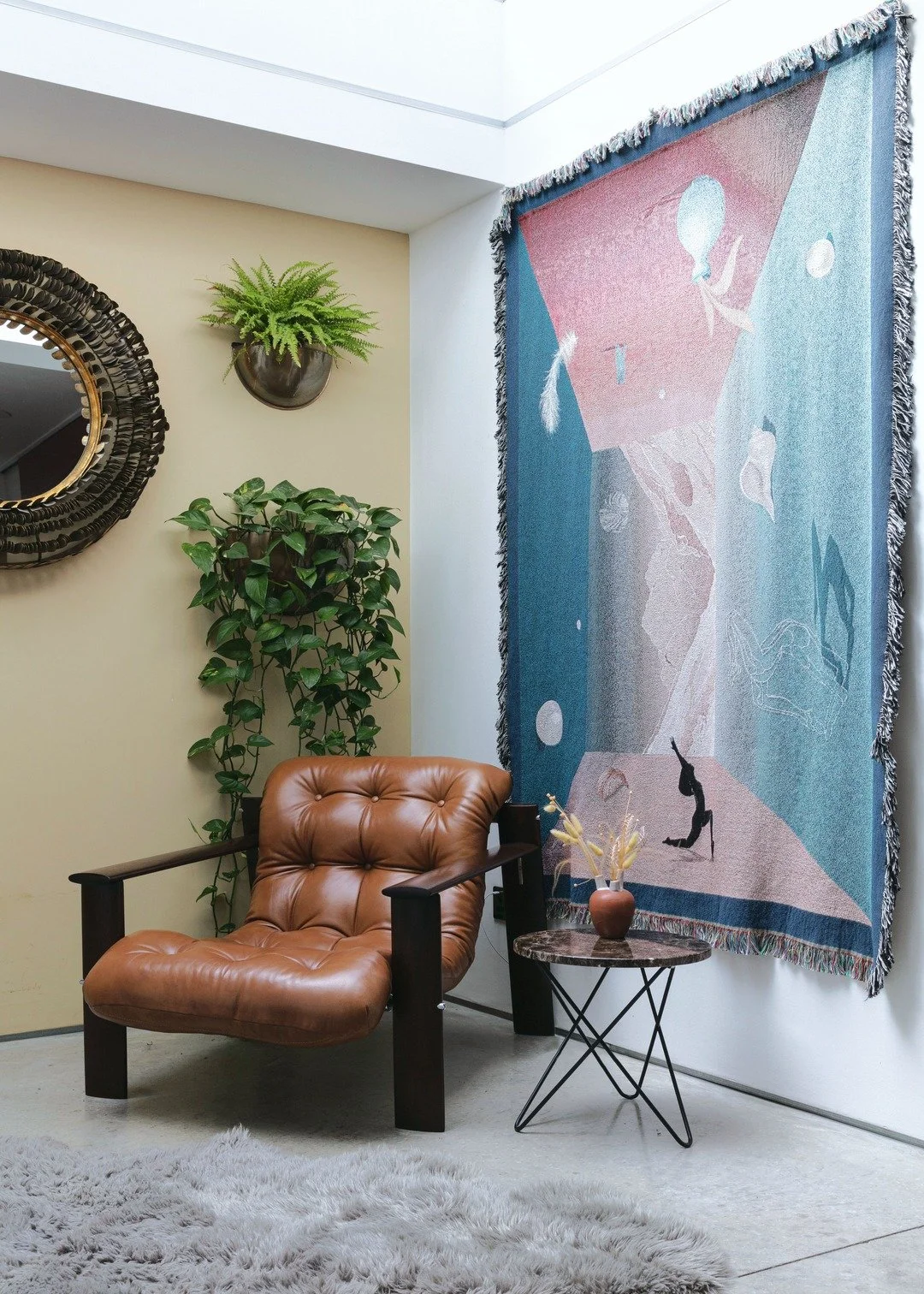
Curation- Rachel Maggart / Artwork ‘Quiet’ by Charlotte Edey
Rachel, Collector, Curator & Independent Arts Consultant
How do you approach collecting for a home versus curating for a public space or gallery?
I would say that a home is more free rein, subject to the collector’s taste. Maybe there’s more scope for a free-associative medley, in a salon-style hang, for example.
While in a public space or gallery there tends to be a tighter conceptual premise underpinning the curation, with the works more thematically organised.
In either domain—private or public—I’m thinking about how all the works will come together as facets of a whole.
What draws you to a piece on a more instinctive level before any rational justification?
I suppose art appeals on an instinctual level primarily; color, harmony/balance, movement/stillness, surface texture and other compositional elements all work on the emotions.
For me any rational justification for a piece will still pay homage to these formal attributes, although content/subject matter seems to enter in on this level as well, as a key part of how the piece might be communicated to others, which carries implications of a piece’s broader significance, and resale value.
How do you balance cohesion with individuality across a collection?
I think cohesion arises naturally from fidelity to a collector’s individual preferences.
Cohesion for me is simply the dialogue occurring between diverse works arranged thoughtfully within the same space, with a view to reflecting the recurring motifs and formal inclinations that would tell their own story of the collector’s taste—a story that could be told not by looking at each work unto itself, but through the revelatory juxtapositions and sightlines relating the works to one another.
Do you think a home should evolve around the art, or the art around the home?
It depends on the collector.
I certainly lean toward the home evolving around the art, but it may be that some people think of art as more decorative, less transformative, which is valid.
Art will inevitably alter a space, but it may be that a more active intervention is not in line with the collector’s objectives, for example, if she wishes to highlight an architectural feature on its own, or tends toward a more minimalist aesthetic.
What role does memory or personal narrative play in the way you curate?
A critical one, whether or not I am conscious of it—although memory in this case could be simply an archive of artworks I have encountered that have moved me in some way.
It would be hard to separate personal narrative from any project that becomes a focal point in one’s life; perhaps there is an intellectual resonance that makes a project exciting, but even then, the root of this may be deeply subjective.
Is there a piece you’ve lived with that revealed itself differently over time?
Yes, they all do if I continue to pay them attention.
In the room my home opens onto there is a talismanic wall sculpture, Simulacra of the Spirit, by AJ Fosik, reminiscent of Native American totems. The other day my nine-year-old son was counting the many repeating eyes of this mythic psychedelic creature on display, and they occurred to me for the first time as being a study of kinetic energy in the medium of wood. For me the artist has depicted the optical effect of a dynamic object in space, when it moves and leaves a kind of visual echo or trail behind it.
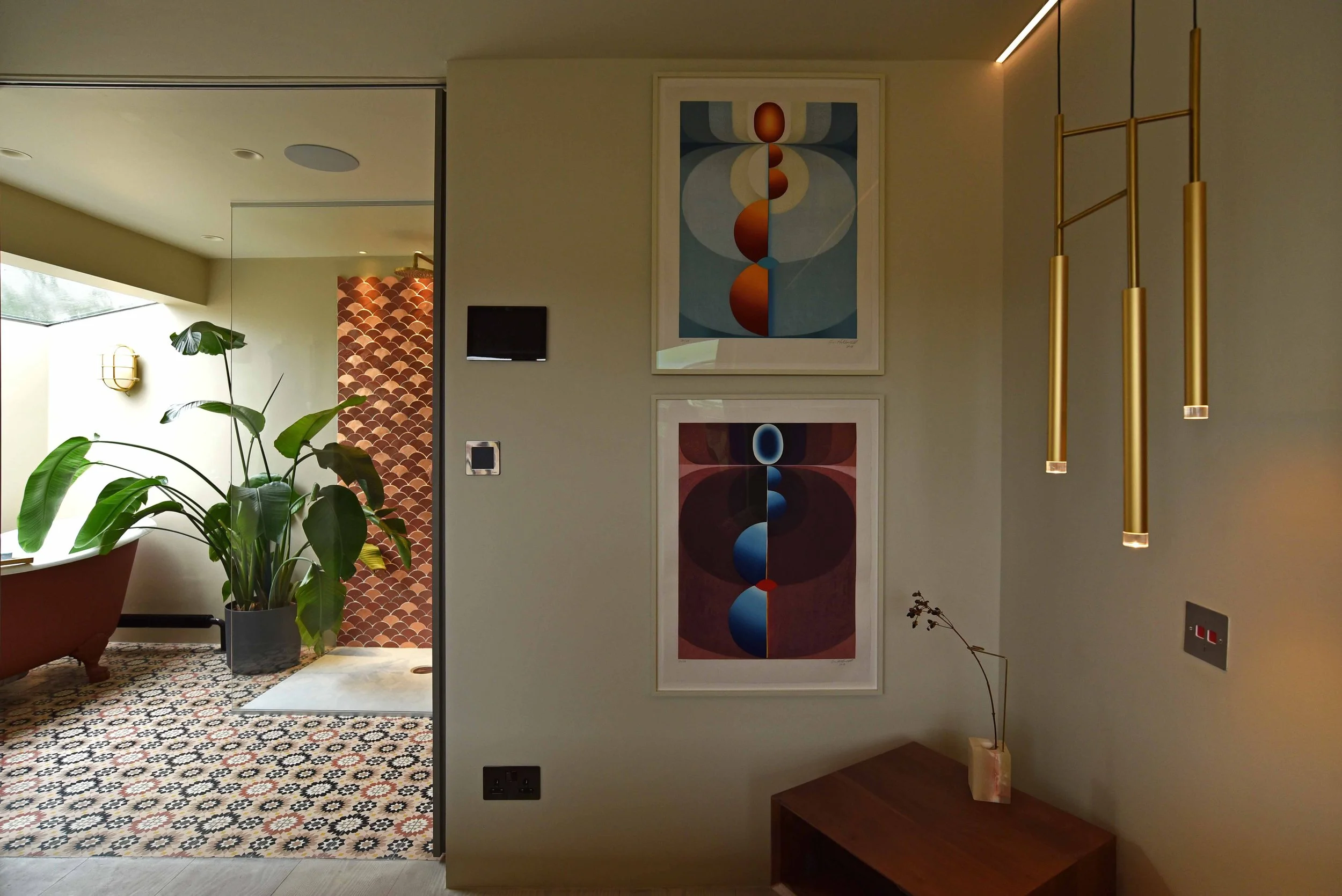
Curation- Rachel Maggart / Artworks by Loie Hollowell
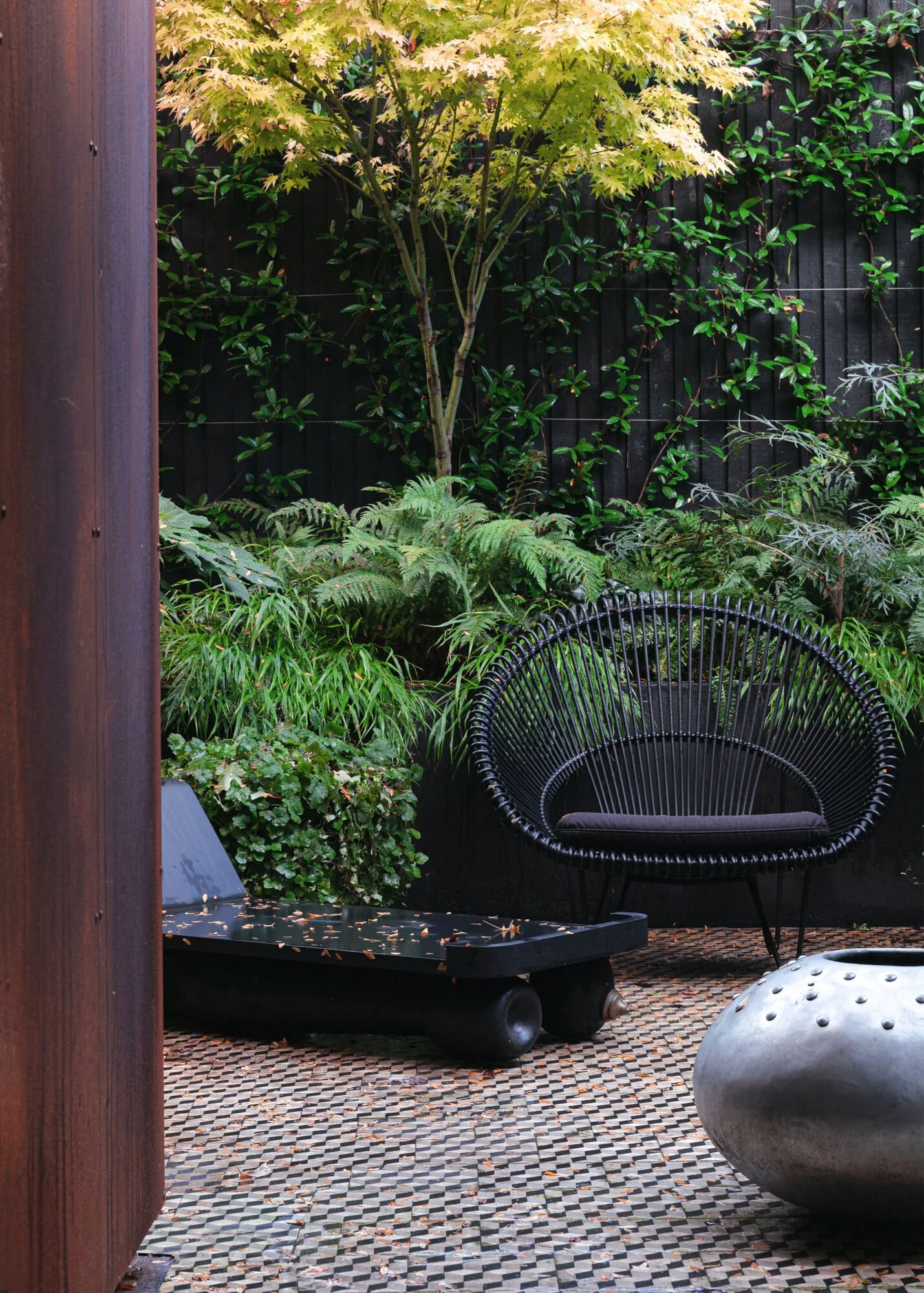
Curation- Rachel Maggart / Artwork by Simone Brewster
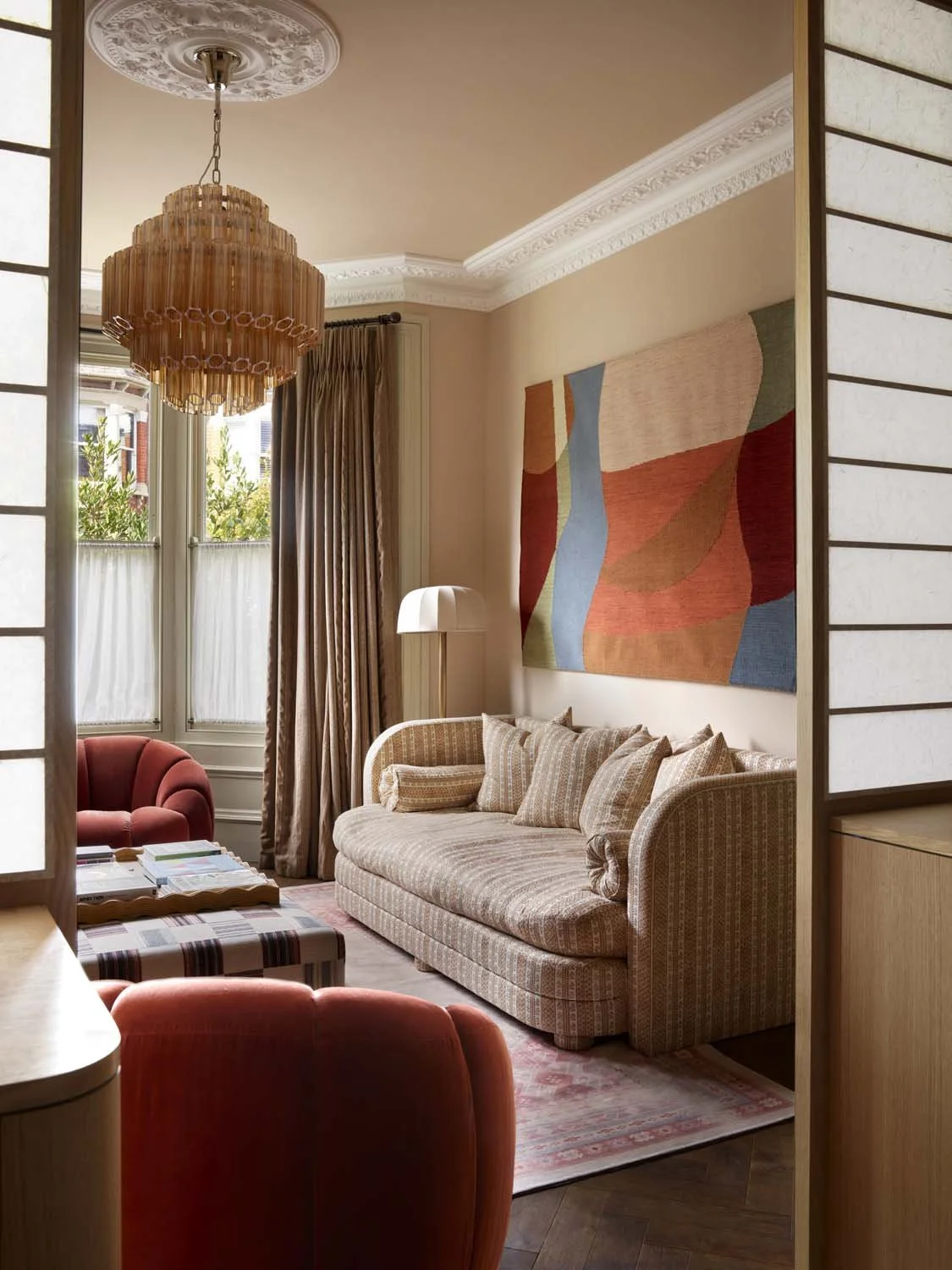
Curation- Gilly Thorne / Artwork by Suzy Cazalet
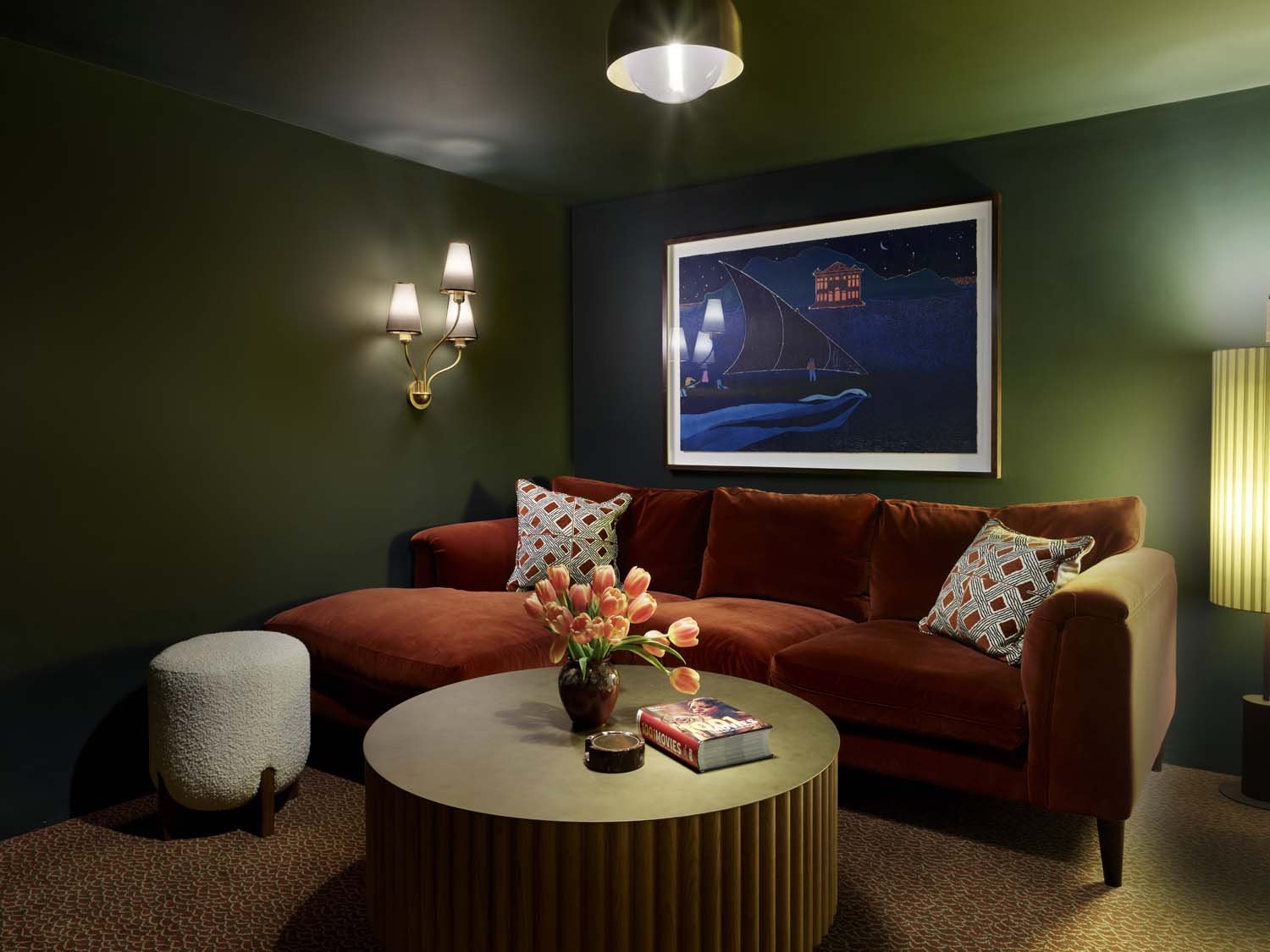
Curation- Gilly Thorne / Artwork by Tom Hammick
