
A visit to the Bristol workshop behind our floors and what it taught us about timber that lasts.
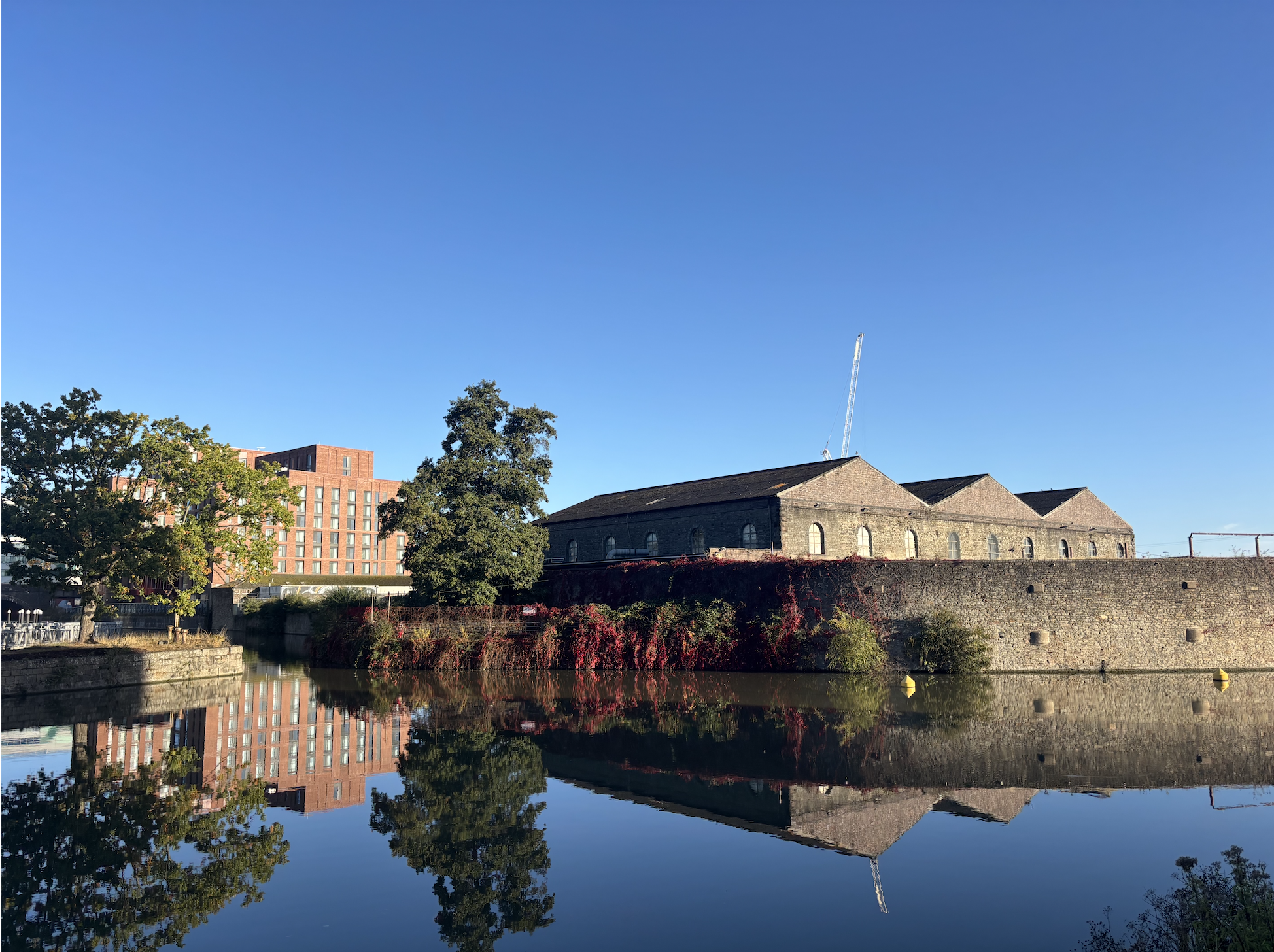
It was the first day of the year that truly felt like autumn. The leaves along the river had turned a deep rust red and the walk to Chauncey's took us past Victorian warehouses, some restored, others still weathered and shuttered, left over from Bristol's years as a working port. It felt like the right setting for a company that still makes things with its hands.
We have specified Chauncey's floors for eleven years but this was a rare trip to seeing where they're made.
The factory floor
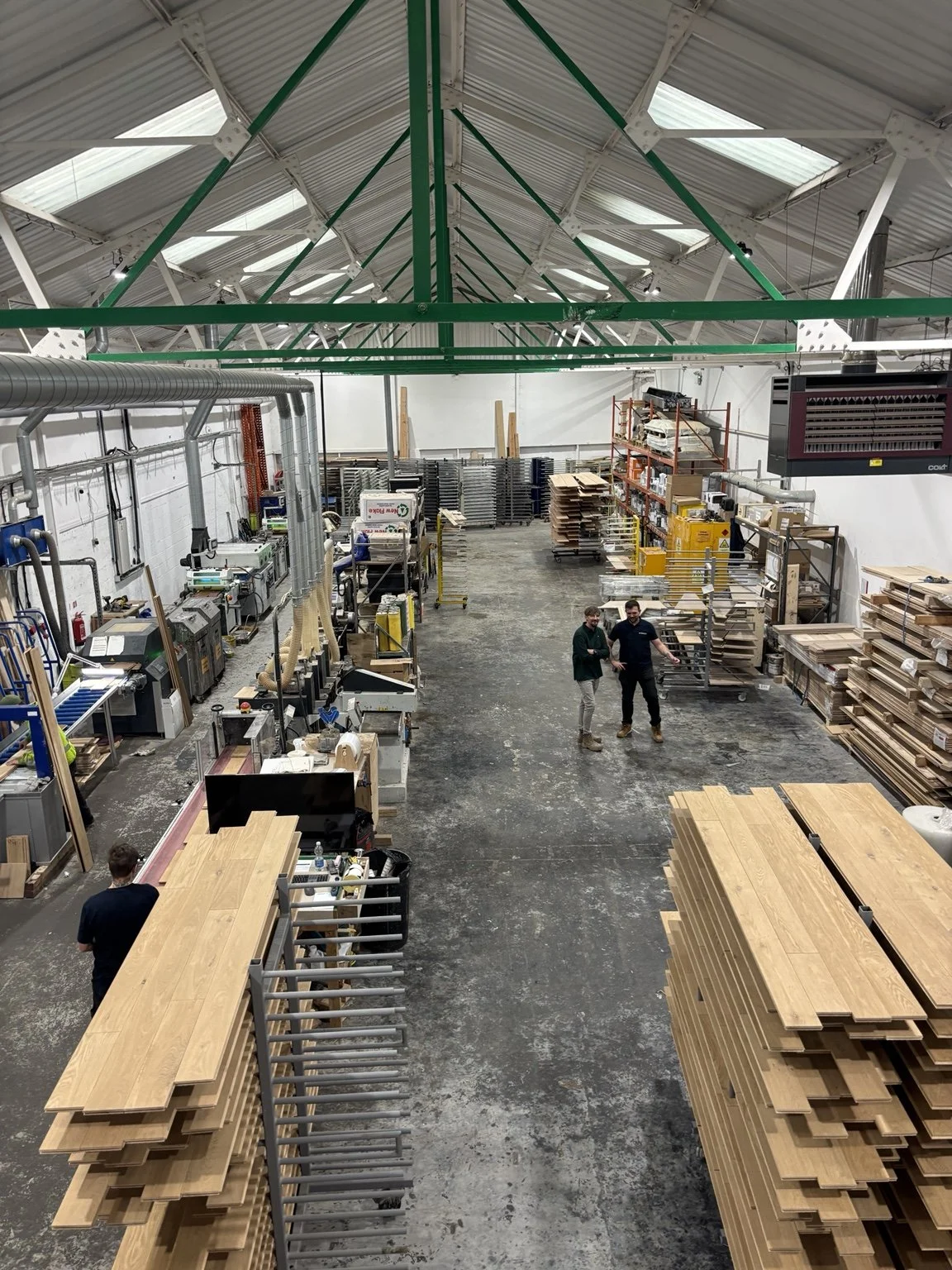
Inside, the workshop is bright and loud. Machinery runs alongside drum and bass on the speakers (this is Bristol after all), and the air carries the sharp smell of finishing oils. Ian, the managing director, walked us through the process from tree to raw board to finished plank.
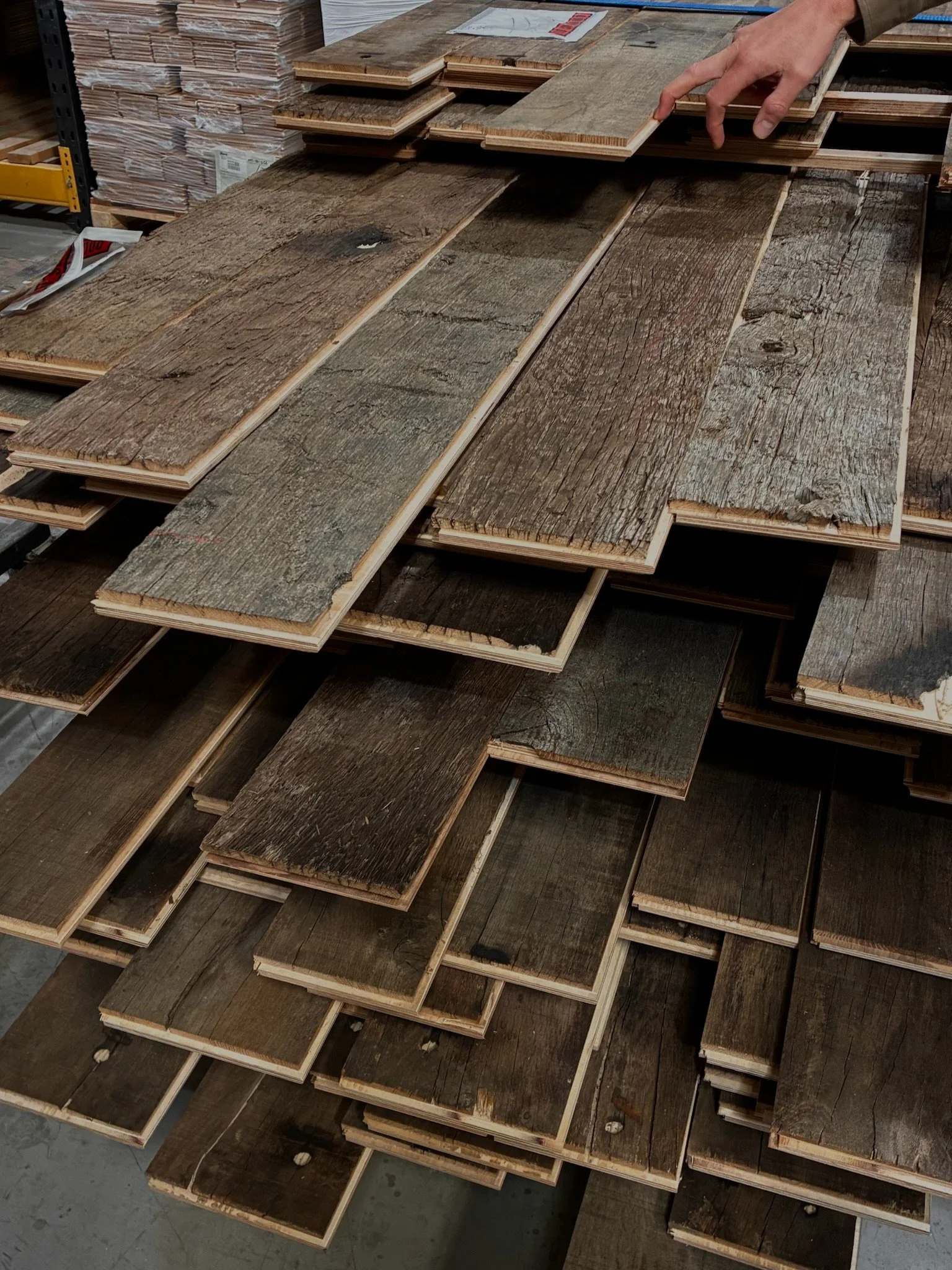
Stacks of timber line the space. Some boards had just arrived, pale and entirely unfinished. Others were reclaimed and almost black with age; these had once been French railway carriages and we found ourselves wondering how many journeys and what cargo they had carried before ending up here.
Most of what passes through is oak, though Chauncey's also works with species such as Douglas fir. What struck us was how much the finish changes the character of the same wood. Brushing draws out the grain and gives the surface texture so we almost expected those boards to feel a little rough. Instead, under your fingers, they have a surprising softness, the kind you associate with something handled for years.
The oils themselves are low-VOC. A floor is the largest surface in most rooms, so what it releases into the air matters, particularly in bedrooms and in homes with young children.
Patterns beyond herringbone
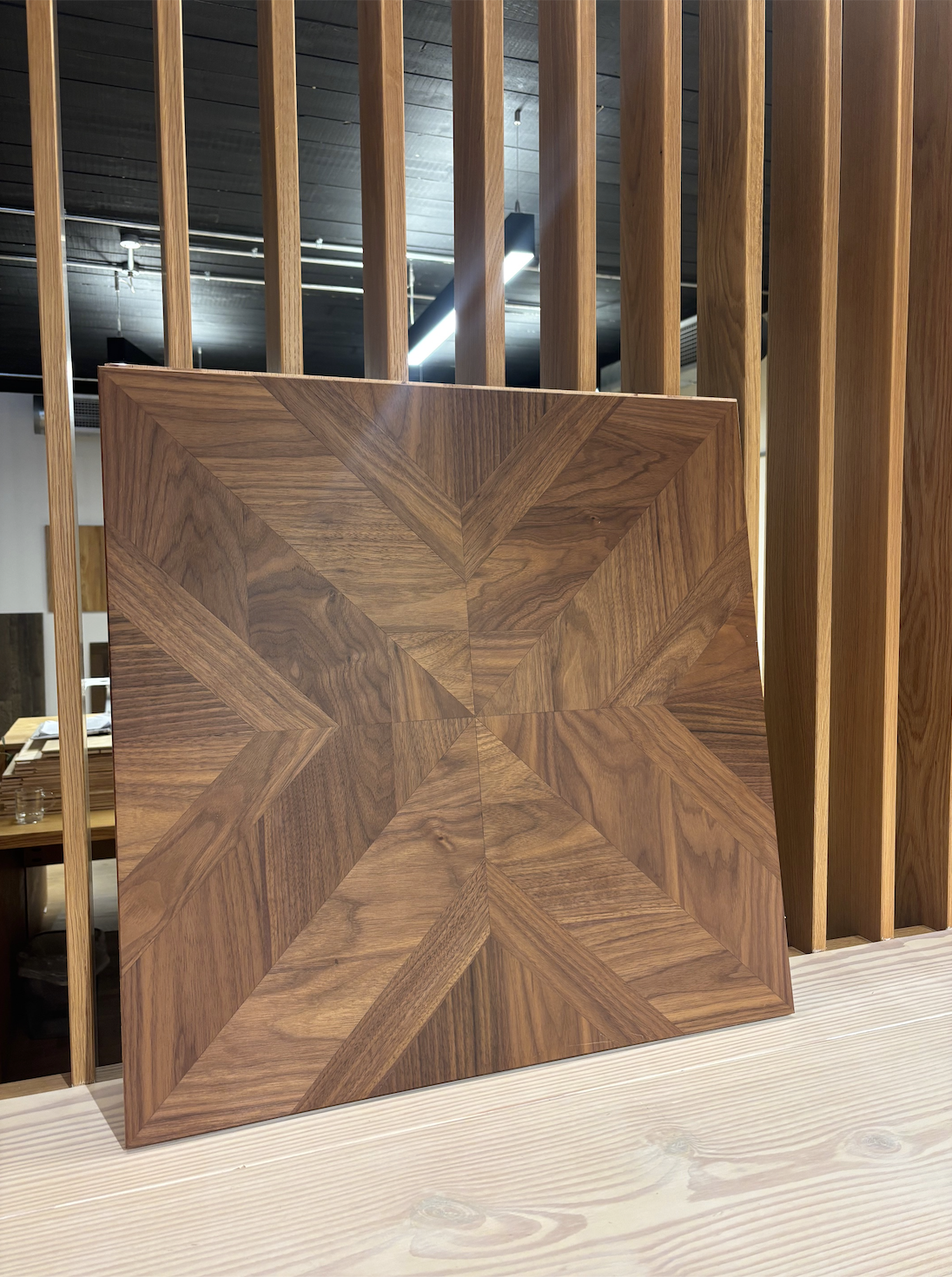
Most of our projects use the classic layouts: herringbone, chevron, the occasional basketweave. At Chauncey's we saw how much further pattern can go. The team is currently working on a large house in Chelsea where the architects have designed a bespoke pattern for each room. Before anything is laid, Chauncey's can make full-size mock-up boards scaled to the actual space, so you can stand on a pattern and judge it in your own light.
It made us wonder why we hadn't asked sooner. In over a decade of working together, we have only taken on one truly customised floor with them. Bespoke turns out to be far less complicated than we'd assumed and it opens real possibilities: a pattern that shifts subtly from hall to drawing room, or a layout that answers the proportions of a particular period house.
A floor that can be renewed
The most useful thing we brought home for clients is about longevity. Both solid and engineered timber floor can be sanded back and refinished when it begins to show its age. On Chauncey's 20mm engineered boards that can be done four or five times; on 15mm boards, two or three. Across the life of a home, that is a floor which can be returned to its best again and again.
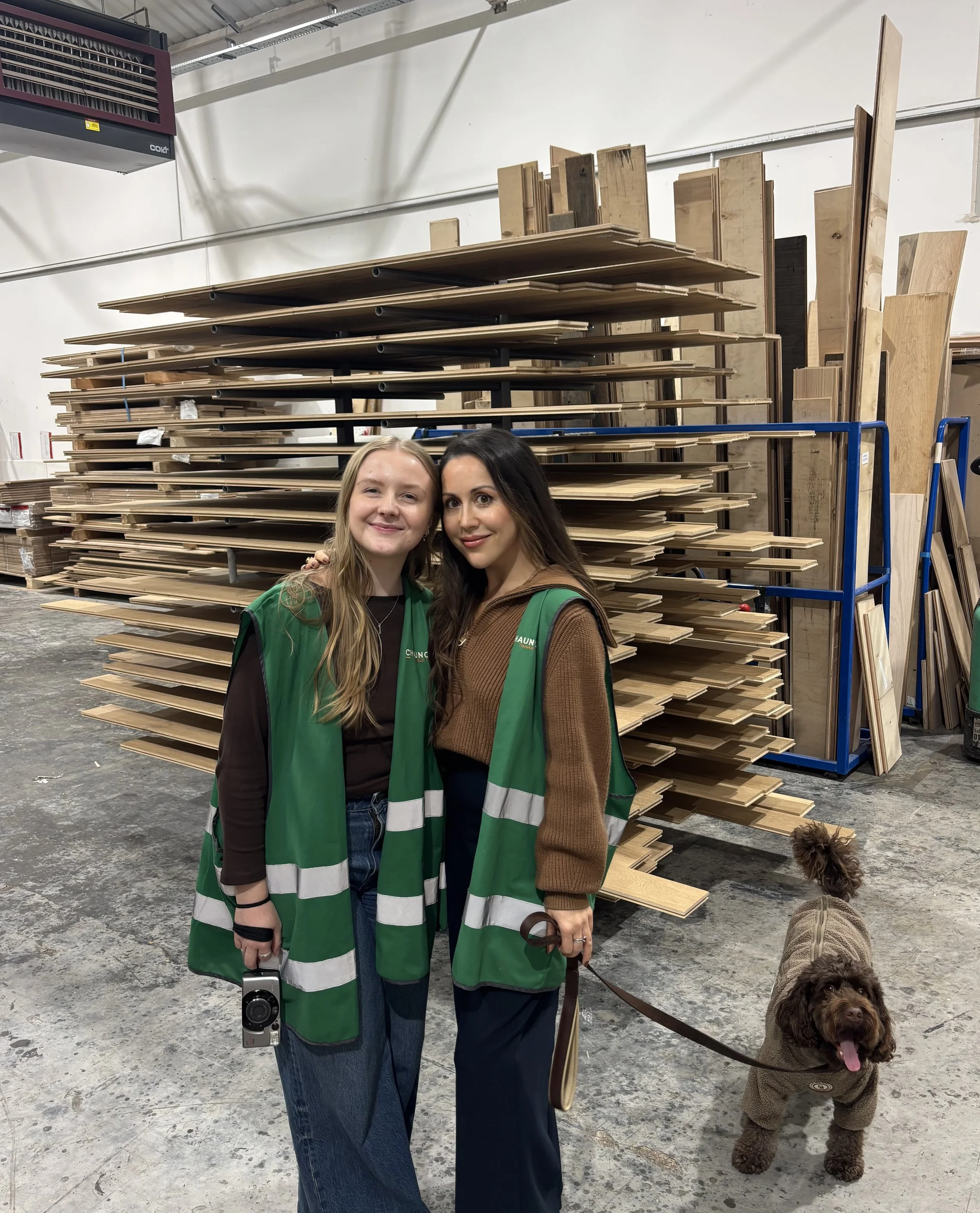
This changes how we think about wear. In a busy family home, scuffs are inevitable and a good timber floor absorbs them as character. But knowing the surface can be restored means a scratch from the dog or a dropped pan is never the end of the story. George, our studio dog, came along for the day, and we suspect he approved.
The showroom
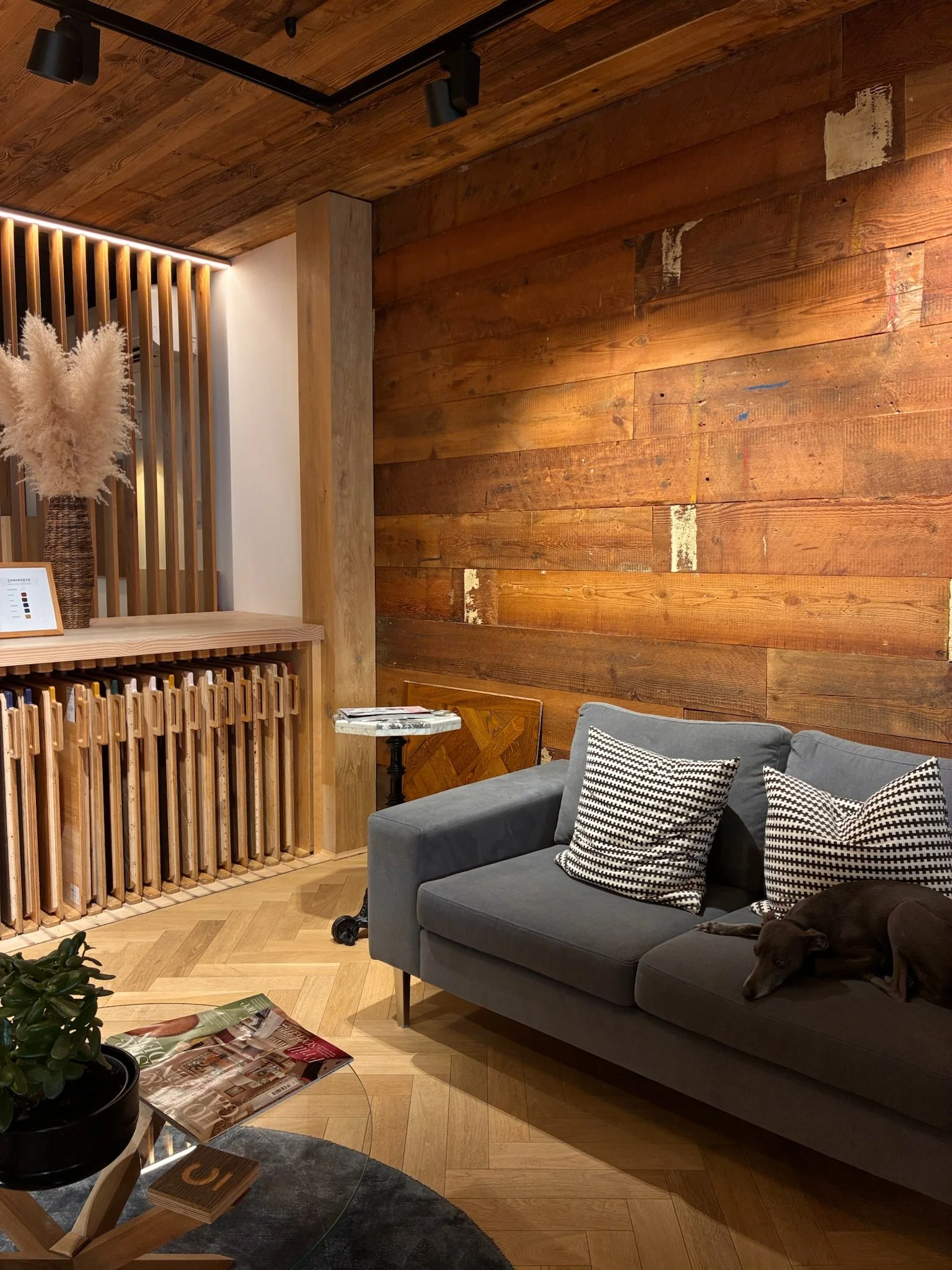
We finished in the showroom, where the smell is entirely different. Away from the oils, the timber smells clean and faintly sweet and you can take your time: run a hand along a brushed oak plank, hold a reclaimed board up to the window, lay two finishes side by side and ponder over choices with a cup of tea on the sofa. It's the experience we want our clients to have when we present a scheme and it's why we like to understand a material properly before we put a sample in front of anyone.
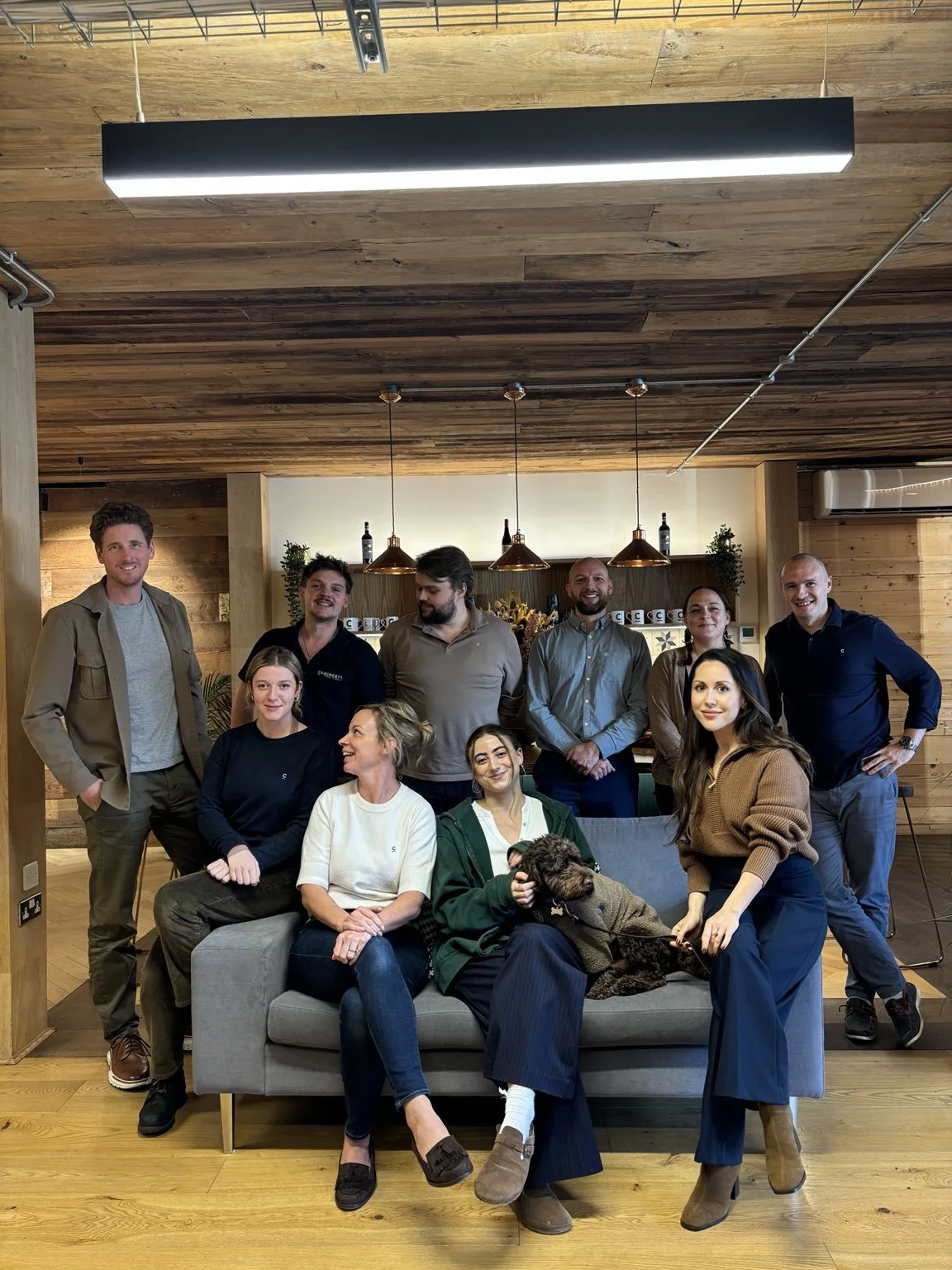
Our thanks to Clare, Tim and the marketing team for organising the visit, to Ian for showing us around, and to Alice, our account manager, for her time and patience with all our questions. We came home with a great deal to think about and a few patterns we're already keen to try.