

How Should I Budget for an Interior Design Project in London?
One of the first questions clients understandably ask is: how much should I budget for my interior design project?
The honest answer is that no two projects are quite alike. The cost of renovating a London home will depend on its size and condition, the extent of the work, the quality of the finishes and furnishings, and the level of bespoke detailing involved. A decorative refurbishment of an apartment is very different from the reconfiguration and restoration of an entire period house.
Nevertheless, understanding how a project budget is structured can help you establish realistic expectations from the outset and make more informed decisions as the design develops.
Our initial conversations explore not only how you would like your home to look and feel, but how you live, what the property requires and where your priorities lie. From there, we can begin to consider how your ambitions align with the available budget and where investment will make the greatest difference.
What should an interior design budget include?
A complete project budget comprises several distinct elements. Considering them separately helps ensure that building work does not consume the funds needed for the materials, furnishings and details that ultimately give a home its character.
Interior design fees
Design fees cover the creative and technical work required to develop and communicate the design. Depending on the project, this may include spatial planning, concept design, lighting, kitchens and bathrooms, bespoke joinery, technical drawings and detailed specifications.
Our Bespoke Design service guides a project from its earliest ideas through to the final decorative details. This process also gives contractors and specialist makers the information they need to price and execute the work accurately, reducing the likelihood of costly assumptions and changes on site.
Construction and specialist works
The construction budget covers the physical work needed to realise the design, from structural alterations, plumbing and electrics to decorating and installation.
London properties can bring additional considerations. Period houses may contain layers of previous alterations, while apartments can be subject to licences to alter, restricted working hours and complex access arrangements. Larger projects may also require an architect, structural engineer, lighting designer or quantity surveyor, whose fees should be allowed for separately.
A reliable construction cost can usually only be established once the design has been developed and contractors have a coordinated set of drawings and specifications to price.
Interior architectural fixtures, finishes and sanitaryware
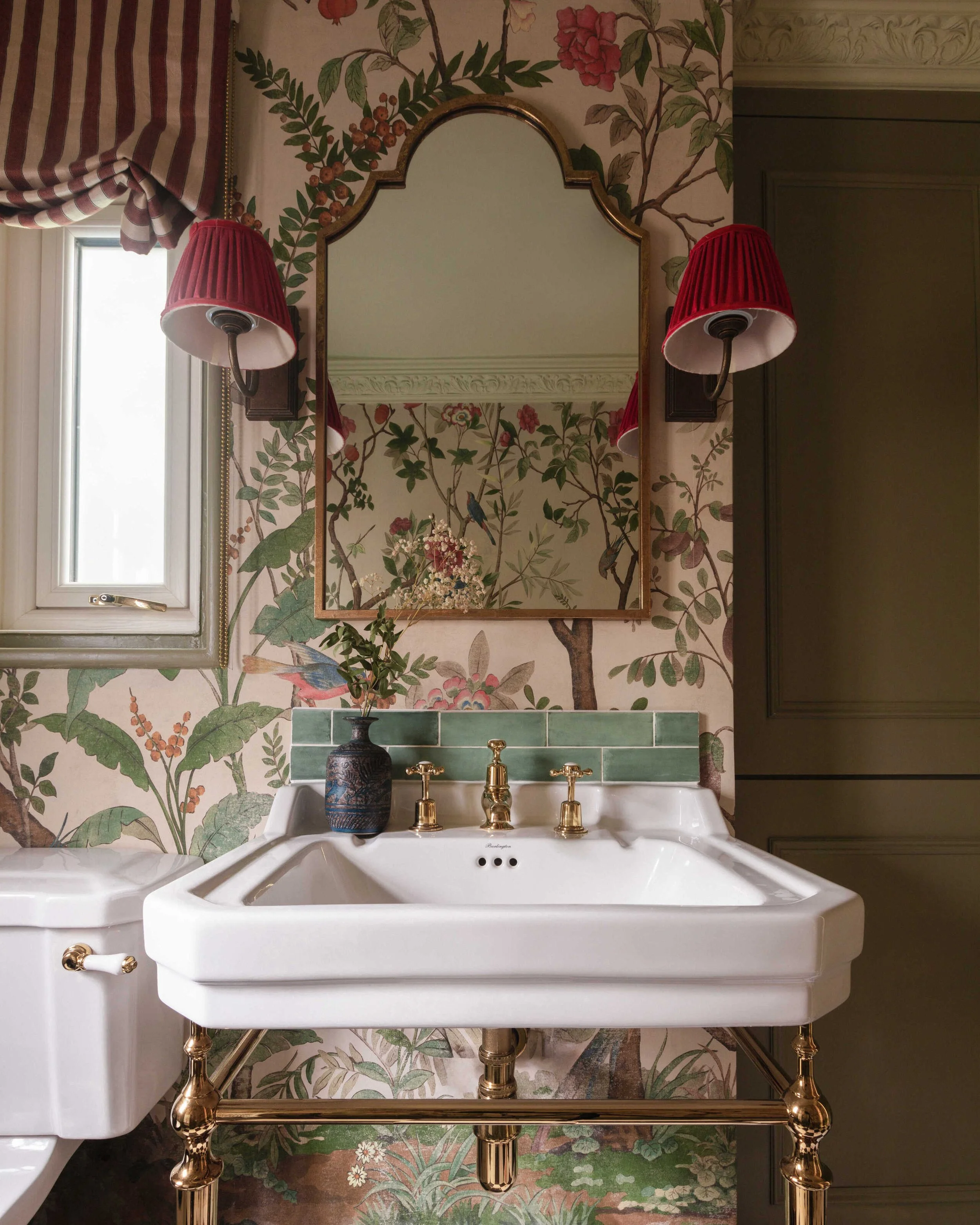
This category includes the elements that shape the material character of the interior, such as flooring, stone, tiles, sanitaryware, brassware, architectural lighting, ironmongery and decorative finishes.
The cost can vary considerably according to the quality and complexity of the specification. It is also important to allow for installation as well as the products themselves, since specialist materials may require additional preparation and experienced tradespeople.
We consider these elements integral to the design. Their proportions, finishes and relationship with the surrounding architecture all contribute to how resolved the completed home feels.
Bespoke joinery and fitted furniture
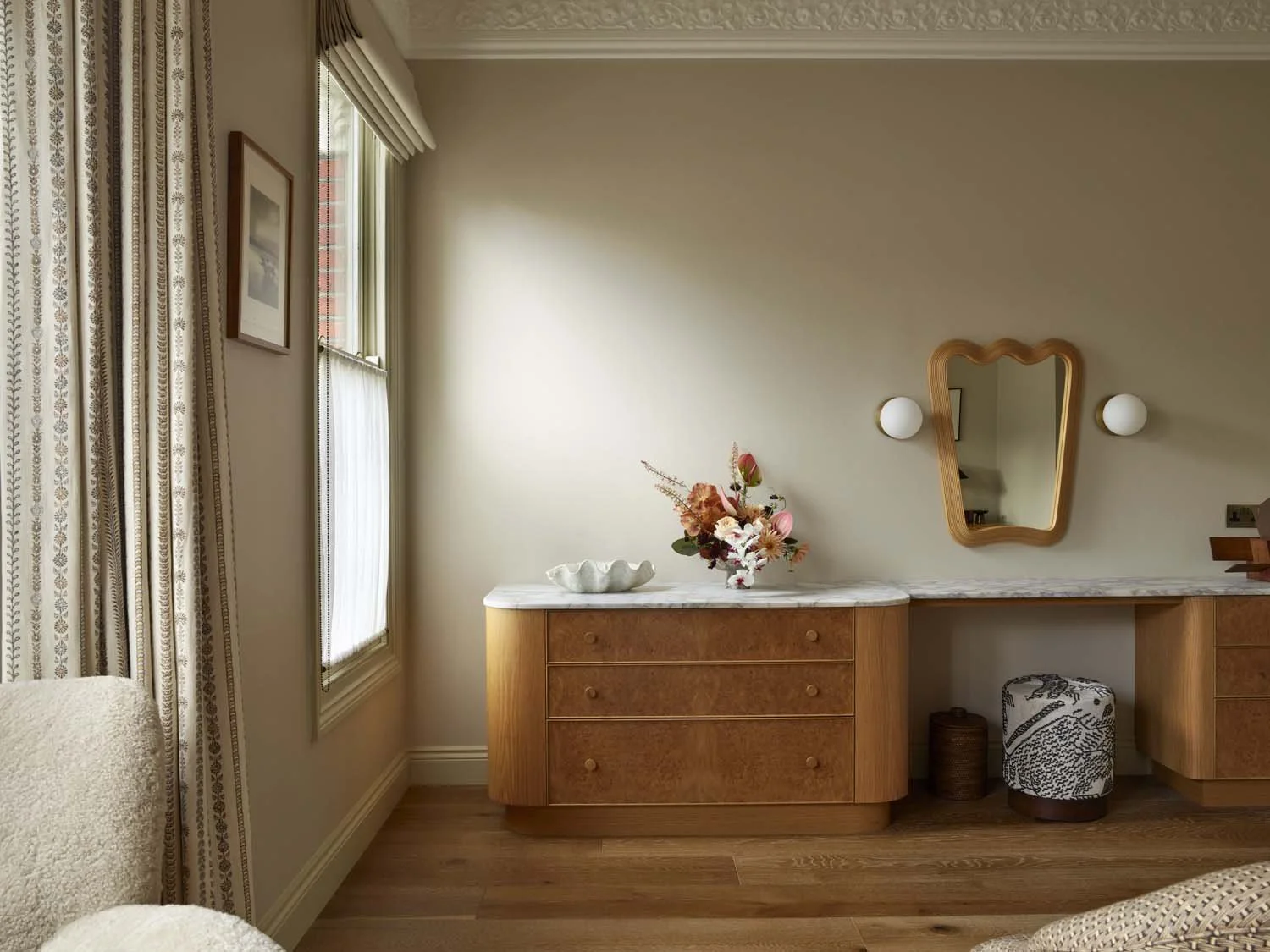
Kitchens, wardrobes, libraries, bathroom vanities and fitted storage may all be designed specifically for the property and the people who live there.
Bespoke joinery is particularly valuable in London homes, where unusual proportions, awkward alcoves and limited space are common. It can provide intelligent storage while strengthening the architectural character of a room.
Costs depend on the scale and complexity of the design, materials, internal specification, hardware and craftsmanship. An initial allowance can be helpful, but an accurate quotation requires a sufficiently detailed design.
Furniture, lighting and decorative elements
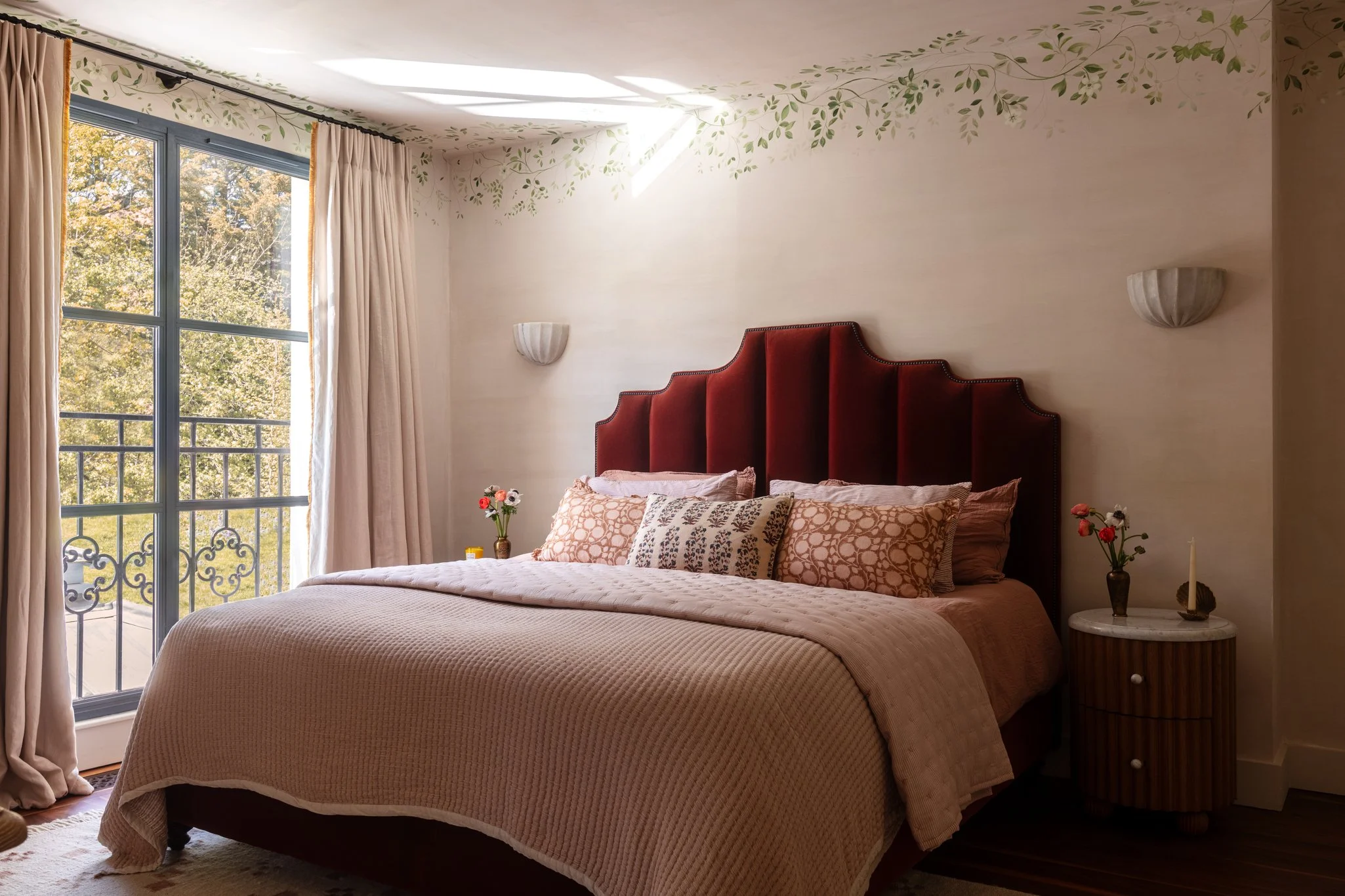
The furnishing budget may include furniture, decorative lighting, rugs, window treatments, artwork, mirrors and accessories. These are the pieces you see, touch and live with every day, and they transform a completed renovation into a layered and personal home.
We often recommend investing in the elements that work hardest or have the greatest visual presence, such as a well-made sofa, beautifully constructed curtains or a generous rug. These can be combined with vintage pieces, artworks and more modest discoveries to create a scheme that feels collected rather than uniformly expensive.
Not everything needs to occupy the same price point. What matters is the relationship between the pieces and the contribution each makes to the whole.
Procurement, delivery and installation
Procurement involves obtaining quotations, placing and tracking orders, checking specifications and coordinating suppliers. The budget should also allow for delivery, storage, specialist handling and installation.
These costs can be particularly significant in London, where parking restrictions, upper-floor apartments and limited access may complicate delivery. We oversee the procurement of furnishings within our schemes, and explain our structure clearly at the outset so clients understand how purchasing will be managed.
VAT and contingency
When comparing costs, always check whether VAT has been included. Construction quotations, professional fees and supplier prices may be presented differently, and VAT can materially affect the overall budget.
We also recommend retaining a contingency, particularly when renovating an older property. Even with careful planning, work can reveal outdated wiring, plumbing problems or earlier alterations that need to be corrected. The contingency should therefore be treated as part of the working budget rather than as money already available to spend elsewhere.
Where should you invest?
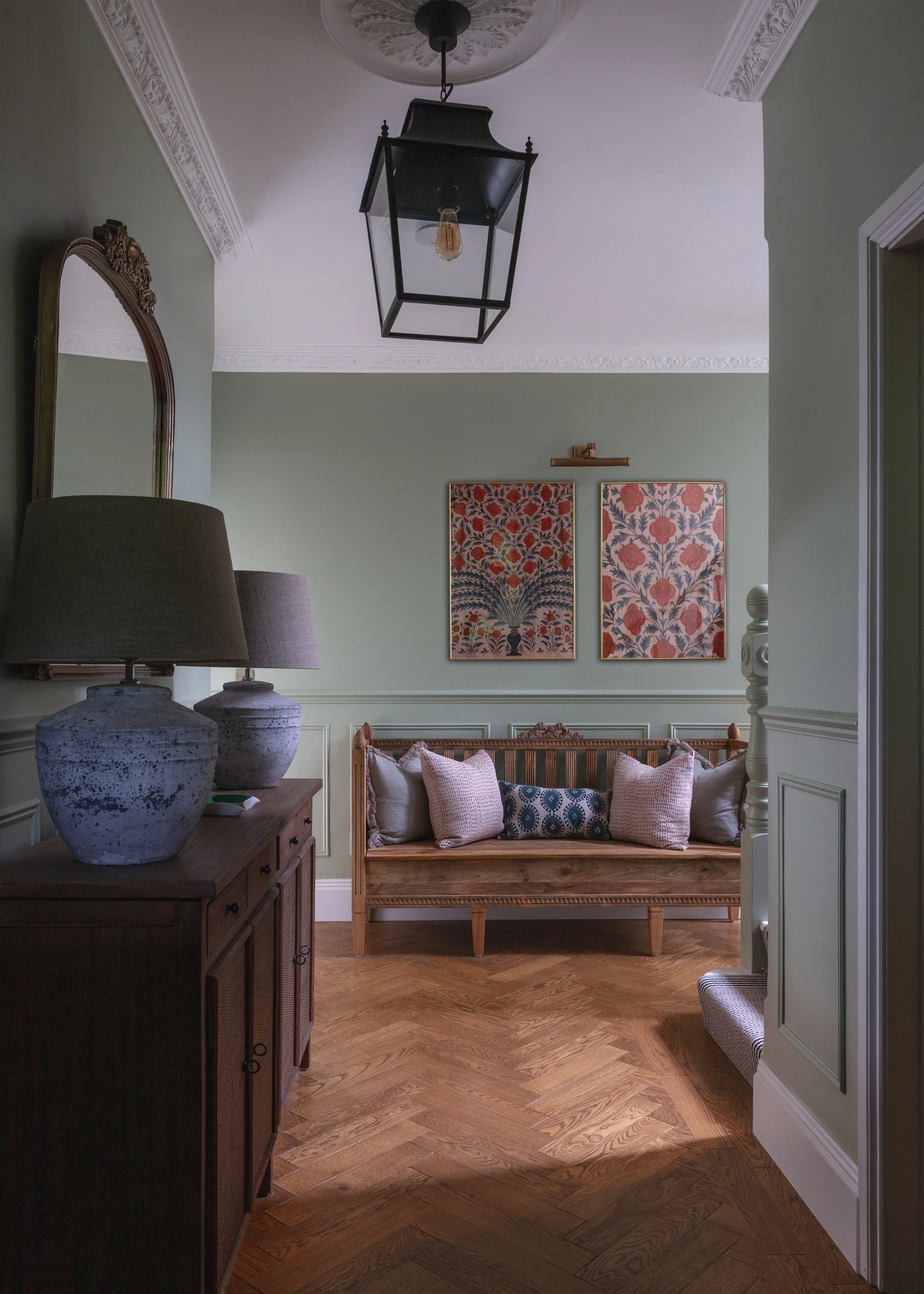
A successful budget directs investment towards the aspects of the home that matter most. For one client, this might be a beautifully designed family kitchen; for another, an atmospheric drawing room, carefully considered lighting or a wonderfully calm bedroom.
Our role is to understand those priorities and consider the project as a whole. This helps us identify where craftsmanship will have the greatest impact, where something existing can be retained and where a more economical choice will not compromise the integrity of the scheme.
Begin with an open conversation
You do not need to arrive at our first meeting with every figure resolved. It is helpful, however, to have a sense of the overall investment you feel comfortable with and what that figure needs to encompass.
An open conversation about budget helps us understand what matters most to you, shape an appropriate scope and advise where additional investment will make a meaningful difference. We can also consider whether your home is best approached as one complete project or in thoughtfully planned stages.
Ultimately, a successful budget is about making discerning choices, respecting the character of the property and investing in the details that will bring lasting pleasure.
